

ACCME Standards Overhaul: What Every CME Provider Needs to Know
Expert Perspectives · Madelyne Fabrizio, BA, CHCP · 2024-09-27
As a CME provider, staying up-to-date with the latest accreditation standards is crucial for maintaining the integrity and effectiveness of your programs. The Accreditation Council for Continuing Medical Education (ACCME) updated its standards in 2020, shifting from the “Standards for Commercial Support” to the new “Standards for Integrity and Independence.” While most of the changes have been implemented in CME programs, there are still things that get overlooked or forgotten. This blog post will break down the key differences between the old and new standards, helping you navigate these changes and ensure your CME offerings remain compliant and impactful.
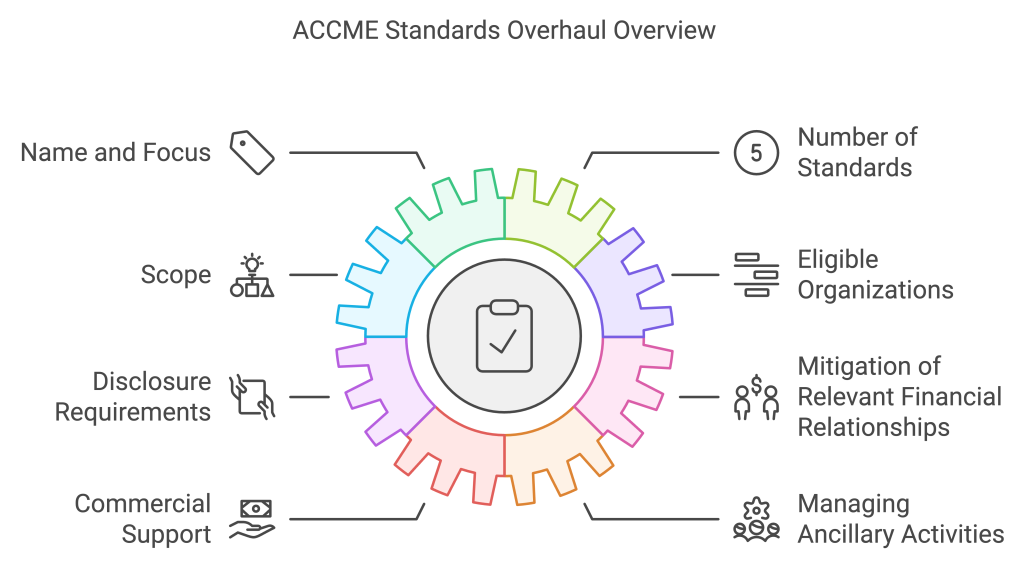
1. A New Name and Broader Focus
The most apparent change is in the name itself. The transition from “Standards for Commercial Support” to “Standards for Integrity and Independence” signifies a broader, more comprehensive approach to maintaining the quality and objectivity of accredited continuing education.
What this means for you: While commercial support remains an important consideration, you’ll need to pay attention to a wider range of factors that influence the integrity and independence of your educational programs.
2. Streamlined ACCME Standards
The ACCME has condensed its standards from 6 to 5, making them more concise and easier to follow.
What this means for you: You may find it easier to implement and adhere to the new standards, but don’t be fooled by the reduction in number – each standard now covers more ground.
3. Clearer Definitions of Eligible Organizations
One of the most significant updates is the clear definition of “ineligible companies” – those whose primary business involves producing, marketing, selling, re-selling, or distributing healthcare products used by or on patients.
What this means for you: You’ll need to carefully review your partnerships and ensure you’re not working with ineligible companies in ways that could compromise the integrity of your CME activities.
4. Enhanced Disclosure Requirements
The new standards provide updated and more specific guidance on disclosure requirements for relevant financial relationships.
What this means for you: You’ll need to update your disclosure processes to ensure they meet the new, more detailed requirements. This may involve revising your disclosure forms and procedures for collecting and reviewing this information. Refer to our article, “Mastering the Art of Financial Disclosures in CME: A Step-by-Step Guide” to ensure you’re following all the necessary steps to keep the transparency of any relevant financial relationships.
5. More Robust Financial Relationship Mitigation
While the old standards required identifying and resolving conflicts of interest, the new ones offer more specific guidance on mitigating relevant financial relationships.
What this means for you: You’ll need to develop and implement more comprehensive strategies for identifying potential relevant financial relationships and mitigating their impact on your educational content. Refer to our article, “Navigating the Minefield: A Comprehensive Guide to Mitigating Relevant Financial Relationships in CME” for a more in-depth explainer on the strategies available for mitigation.
6. Updated Commercial Support Rules
The new standards maintain similar rules about commercial support but with some important updates and clarifications.
What this means for you: Review your commercial support agreements and processes to ensure they align with the updated guidelines. Pay particular attention to any changes in how support can be acknowledged or how funds can be used.
7. Managing Ancillary Activities
A new standard addresses the management of ancillary activities promoted alongside accredited education.
What this means for you: If you offer additional activities or materials alongside your CME programs, you’ll need to ensure these are clearly separated from accredited education and do not create bias or commercialization.
Conclusion
The shift to the Standards for Integrity and Independence represents a significant evolution in the ACCME’s approach to ensuring high-quality, unbiased continuing medical education. As a CME provider, it’s essential to thoroughly review these new standards and update your processes accordingly.
Here are some best practices to help you navigate these changes:
- Conduct a thorough review of your current practices against the new
- Update your disclosure forms and processes to meet the new
- Develop a comprehensive strategy for mitigating relevant financial
- Review and update any commercial support
- Ensure clear separation between accredited education and any ancillary
- Provide training to your team on the new standards and updated
By embracing these changes and implementing robust processes to meet the new standards, you can ensure that your CME programs continue to provide high-quality, unbiased education that truly serves the needs of healthcare professionals and, ultimately, improves patient care.
To assist you further, we’ve created a Quick Reference Guide, The Evolution of Accreditation Standards, so you never miss a beat when confirming your processes align with the new ACCME standards.
Remember, while adapting to new standards can be challenging, it’s an opportunity to strengthen the integrity and impact of your CME offerings. Stay informed, be proactive, and don’t hesitate to seek guidance if you’re unsure about any aspect of the new standards.