From Skeptic to Success: How Healthcare Organizations Are Revolutionizing Continuing Education With AI (Without Losing Their Minds)
Expert Perspectives · Madelyne Fabrizio, BA, CHCP · 2025-07-29
When I first heard about AI in healthcare continuing education a few years ago, my immediate reaction was skepticism. Another tech buzzword, I thought. Another expensive solution looking for a problem.
I was wrong—spectacularly wrong.
After working to implement AI in my company’s continuing education programs, I’ve seen firsthand how the right approach can transform learning outcomes while actually reducing costs and administrative headaches. But I’ve also seen implementations that created more problems than they solved, particularly around compliance and quality standards.
The difference between success and failure isn’t the technology—it’s the approach.
If you’re reading this, you’re probably where I was a few years ago. Maybe your CEO mentioned AI in the last board meeting. Perhaps your competitors are touting their “AI-powered” programs. Or maybe you’re genuinely curious about whether this technology can solve the real problems keeping you up at night: outdated content, disengaged learners, skyrocketing development costs, and the impossible task of keeping pace with evolving clinical guidelines.
Here’s what I’ve learned: AI in healthcare continuing education works, but only when implemented thoughtfully. Most organizations fail because they focus on the technology first instead of the strategy. They buy shiny tools without understanding their problems, implement without proper governance, and wonder why their expensive AI investment feels like expensive chaos.
Whether you’re responsible for a single certification program or manage continuing education for an entire health system, this roadmap will help you harness AI’s potential while avoiding the pitfalls that trip up most organizations.
Phase 1: AI in Continuing Healthcare Education – Foundation and Planning
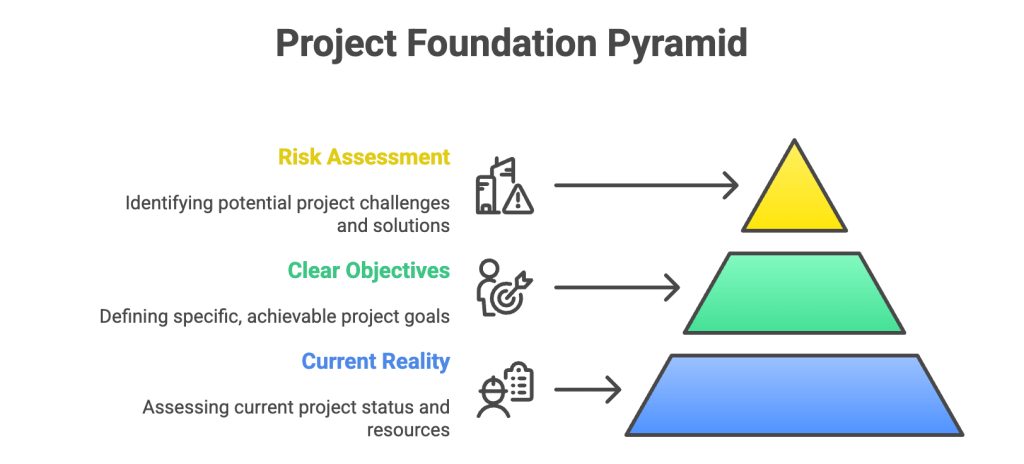
Understanding Your Current Reality
The conversation of wanting to solve a problem with AI but not knowing what the exact problem is happens more often than you’d think. Organizations rush toward AI without understanding their baseline or identifying specific problems worth solving. It never ends well.
Start with an honest audit of your current programs. Document everything: completion rates, learner feedback scores, time spent on content development, cost per learner, and those informal complaints your team shares over coffee.
Pay attention to your team’s daily frustrations. Are they updating the same content repeatedly as guidelines change? Do they struggle to personalize learning for different experience levels? These pain points often indicate where AI can provide immediate value.
Don’t forget about your learners’ technology comfort levels. Survey your learners. Understand their current technology use, preferences, and concerns. This intelligence will shape every decision you make moving forward.
Setting Clear, Measurable Objectives
“We want to use AI to improve learning” isn’t an objective—it’s a hope. Vague goals lead to disappointing outcomes.
Instead, get specific. “Reduce content development time by 40% while maintaining quality scores above 4.2 out of 5.” “Increase knowledge retention scores by 25% as measured by follow-up assessments.” “Personalize learning paths for 80% of participants based on role and experience level.”
Set both short-term wins and long-term transformation goals. You need early victories to build organizational support for the harder work ahead.
Risk Assessment: What Could Go Wrong?
Let me share a scenario that I still think is crazy. An organization implementing AI-generated clinical content without proper review processes. A subtle error in medication dosing could have made it through quality checks and into a widely-distributed module. You need to catch these things before anyone acts on the incorrect information and your company’s AI initiative is ruined.
Healthcare education carries unique risks. Inaccurate information can literally harm patients. Biased content can perpetuate healthcare disparities. Privacy breaches can expose sensitive learner data.
These concerns were highlighted at the 2025 Alliance Annual Conference session on navigating the ethical and legal landscape of AI in healthcare education. As Alexandra Howson, PhD, CHCP noted, generative AI tools often amplify existing biases “in some curious ways.” Nuria Negrao, PhD pointed out that AI-generated content lacks copyright protection, creating legal gray areas.
Create a comprehensive risk assessment that includes technical failures, content accuracy issues, bias problems, legal compliance challenges, and reputational damage scenarios. For each risk, develop specific mitigation strategies and assign clear responsibility for monitoring and response.
Phase 2: Governance and Technology Setup – Building Your Infrastructure
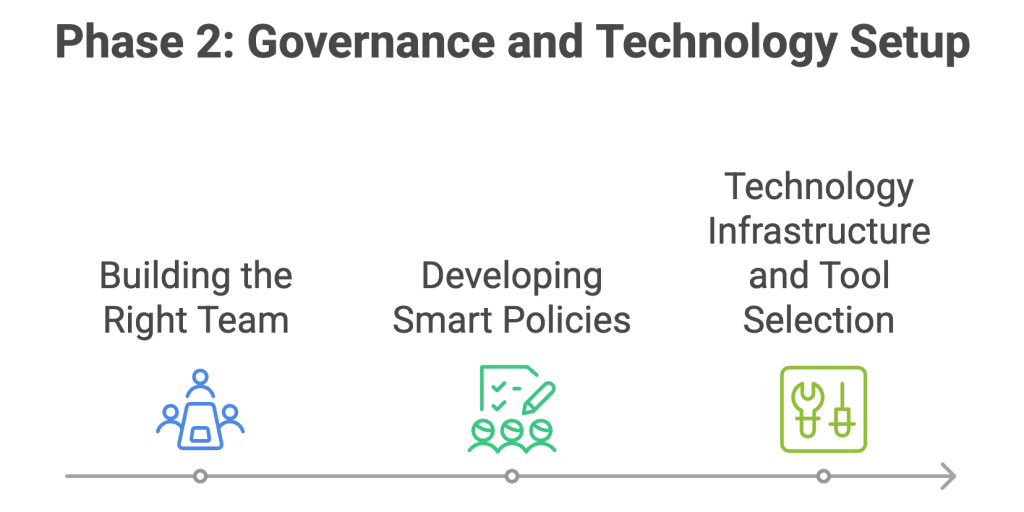
Building the Right Team
Successful AI implementation requires diverse perspectives. You need clinical experts, education specialists, IT professionals, legal advisors, and ethics experts. But don’t create a committee so large it can’t make decisions. I recommend a core governance team of 5-7 people with clear decision-making authority.
As Sara Fagerlie, PhD, CHCP emphasized during the Alliance presentation, “Having people within the committee who know how AI can be used for specific roles or have use cases of how it will be used is really important.” Include people who will actually use the AI tools, not just those who will oversee them.
Developing Smart Policies
Prohibition doesn’t work. Smart policies do. You don’t want to ban AI completely and run the risk of staff using it for other tasks without quality controls in place.
Your AI policies need to be practical and nuanced. Address specific use cases: When should AI be used versus human-created content? What level of review is required for different types of AI-generated materials? How will you handle transparency and attribution?
To start small, use AI to help develop email campaigns or assist with creating project schedules. Then branch out into using it to help create assessments or case study questions, all while being fully vetted.
Technology Infrastructure and Tool Selection
AI tools require robust technical infrastructure. Assess your current systems honestly: learning management platforms, network capacity, data storage capabilities, and security measures. Many organizations underestimate these requirements and face performance problems later.
The AI tool landscape changes very frequently, sometimes even daily! Focus on vendors with proven track records in healthcare, robust security measures, and clear compliance standards. Evaluate tools based on your specific use cases, not impressive demo presentations. Most organizations benefit from a combination of focused tools rather than trying to find one platform that does everything poorly.
Consider total cost of ownership carefully. Factor in licensing fees, implementation costs, training expenses, and ongoing maintenance. The cheapest upfront option often becomes the most expensive long-term choice.
Technical integration breaks more AI projects than any other factor. Create detailed integration plans that include testing environments, rollback procedures, and contingency plans. Establish clear data governance protocols. One organization discovered their AI vendor was using learner interaction data to improve their general AI models, potentially exposing proprietary educational content.
Ethical Framework: Doing the Right Thing
Ethics in AI isn’t just about compliance—it’s about maintaining trust with learners and upholding healthcare education’s integrity.
Develop specific protocols for bias detection and mitigation. This might include diverse review teams including your peer reviewers, bias testing procedures, and regular content audits. Be transparent about AI’s role in content creation. Learners have a right to know when they’re interacting with AI-generated materials.
Create clear accountability measures. Who is responsible when AI-generated content contains errors? How will you handle complaints about biased or inappropriate material?
Phase 3: Content Development and Quality Assurance – Where AI Meets Education
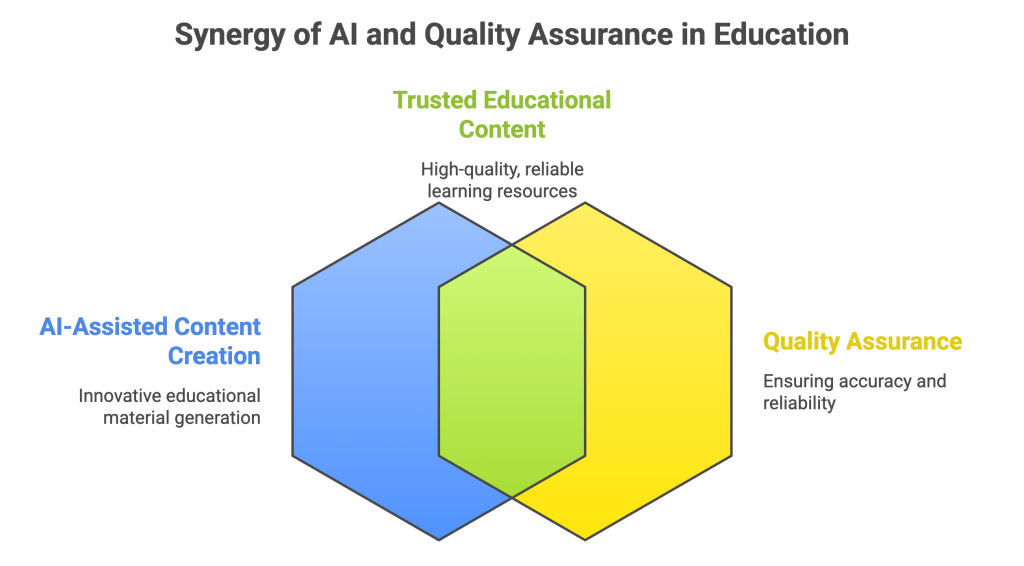
AI-Assisted Content Creation
This is where AI implementation gets exciting—and where you need to be most careful. AI can dramatically accelerate content creation, but it requires thoughtful implementation and rigorous oversight.
Start by developing content templates and style guides that ensure consistency across AI-generated materials. Create libraries of effective prompts for different content types: case studies, assessment questions, clinical scenarios, and educational summaries.
I’ve learned that prompt engineering is as much art as science. “Create a case study about diabetes management” produces generic content. “Create a case study featuring a 45-year-old Hispanic woman with Type 2 diabetes, hypertension, and limited English proficiency, presenting to a busy primary care clinic with poor medication adherence” generates much more useful material.
Remember Morgan Leafe, MD, MHA’s wisdom from the Alliance presentation: “Approach AI with curiosity instead of assumptions. It’s a tool to help humans do their job better.”
Quality Assurance: Your Content Safety Net
Here’s a truth I learned the hard way: AI-generated content can be confidently wrong. The technology produces fluent, authoritative-sounding text that contains subtle errors or outdated information, or outright fiction!
Implement multi-level review processes for all AI-generated content. This typically includes technical review (accuracy, completeness), clinical review (medical accuracy, current guidelines), and educational review (learning effectiveness, engagement).
Source verification becomes more challenging with AI-generated content since the tools often don’t provide clear citations. Develop protocols for fact-checking and ensuring proper attribution.
Create specific checklists for different content types. What needs verification in a case study versus a multiple-choice question? How will you ensure AI-generated clinical scenarios reflect current best practices?
Phase 4: Training and Pilot Implementation – Testing the Waters
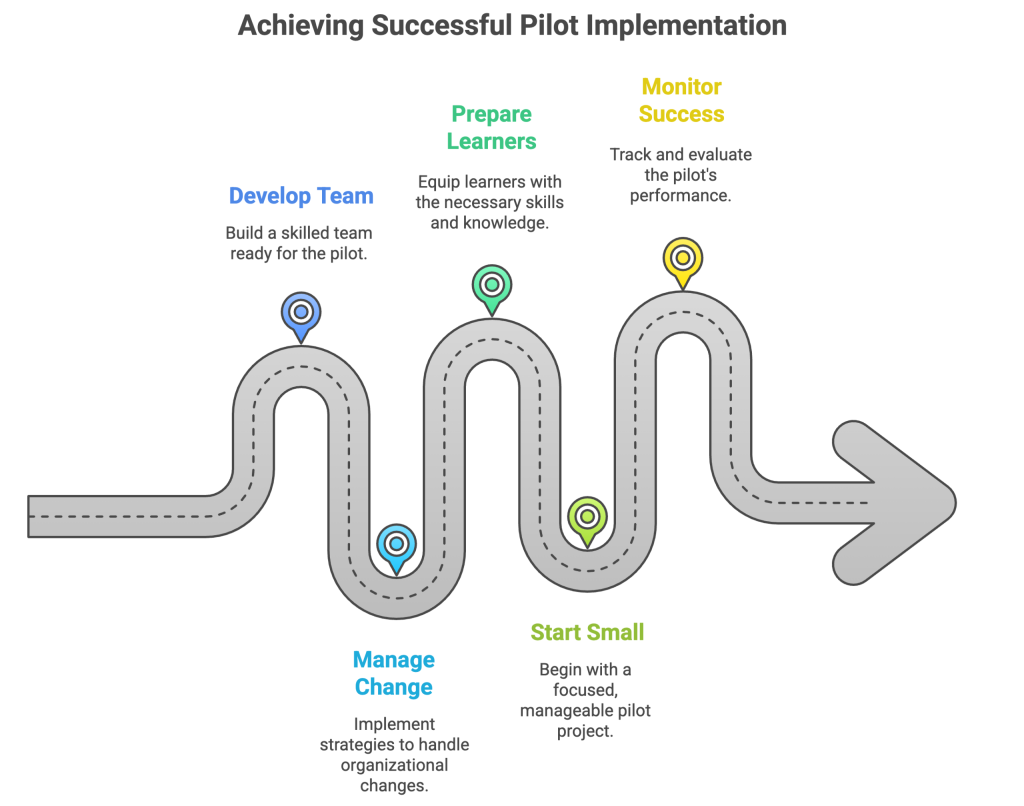
Developing Your Team
Your staff’s success with AI tools will determine your program’s success more than the sophistication of the technology itself. Invest in comprehensive training that goes beyond button-pushing to include AI literacy, prompt engineering, and quality assurance skills.
Address concerns and resistance directly. Many education professionals worry that AI will replace them. Be clear about AI’s role as a productivity tool, not a job replacement. Show how AI can eliminate tedious tasks and free up time for creative and strategic work.
Managing Change Effectively
Change management for AI implementation requires special attention to trust and transparency. Healthcare professionals are naturally skeptical of new technologies, especially when they might affect patient care indirectly through education.
Start with small wins that demonstrate clear value. Show how AI can solve everyday problems before introducing more complex applications. Provide ongoing support and create multiple channels for feedback and questions.
Preparing Your Learners
Don’t forget about your end users—the healthcare professionals participating in your continuing education programs. Create orientation materials that explain AI’s role in content creation, personalization, and assessment. Be transparent about data collection and use. Address common concerns proactively about AI replacing human instructors or privacy concerns.
Starting Small and Smart
The Alliance presentation emphasized the importance of starting small, with Dr. Negrao suggesting organizations “Look at tasks you do all the time that are very repetitive and try to figure out if there is an AI tool that can effectively help with that task.”
Choose pilot projects carefully. Select programs or modules that represent your typical content but aren’t mission-critical. Focus on specific, measurable outcomes for your pilot—perhaps AI-assisted content creation or personalized learning paths.
If you’re interested in hearing more from these insightful presenters, check out this interview where they delve into the challenges faced with implementing AI into healthcare education, strategies to combat these challenges, and the importance of demystifying AI in order to responsibly integrate and use it to its fullest potential in continuing education (CE) programs and activities.
Monitoring and Measuring Pilot Success
Establish clear metrics before your pilot begins. Track both quantitative measures (completion rates, assessment scores, time to completion) and qualitative feedback (learner satisfaction, content quality ratings, staff experience).
Pay attention to unintended consequences. Are learners becoming overly dependent on AI-generated hints? Is personalization creating filter bubbles that limit exposure to diverse perspectives?
Document everything obsessively. Keep detailed records of what works, what doesn’t, and why. This documentation becomes invaluable as you scale your implementation.
Treat your pilot as a learning laboratory. Expect things to go wrong and view problems as opportunities to improve your approach. Use pilot results to refine your policies, procedures, and technical systems before full-scale deployment.
Phase 5: Full Deployment and Scaling – Going All In
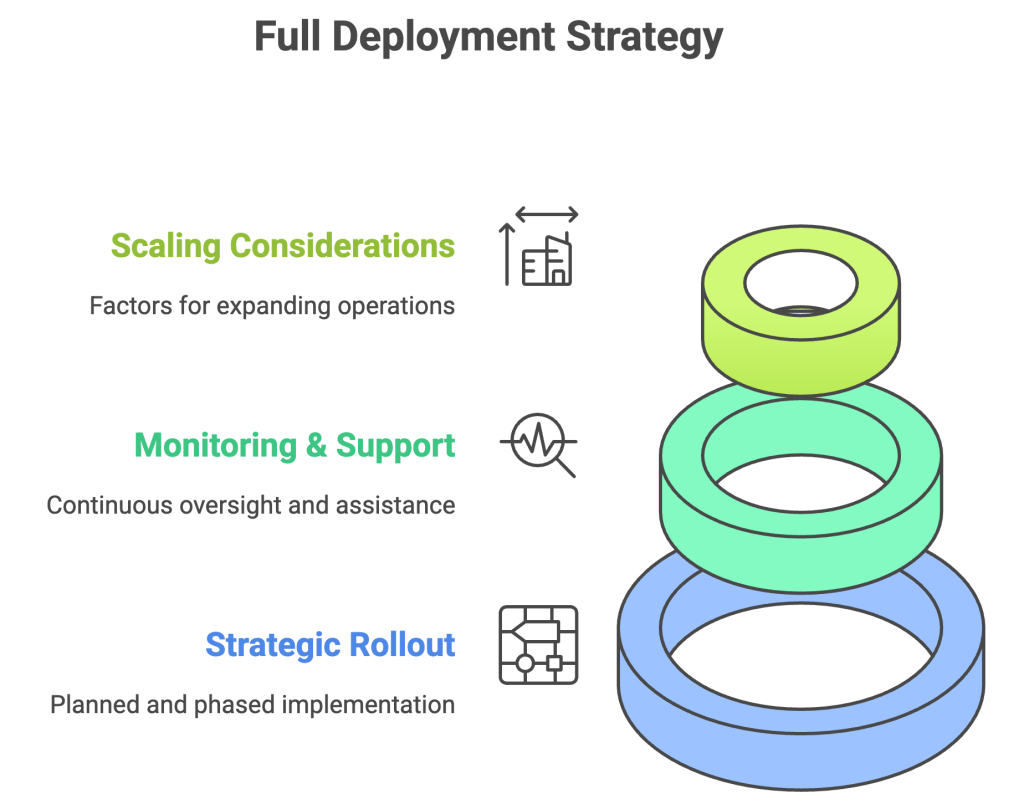
Based on your pilot results, develop a phased rollout plan that builds on your successes while addressing identified challenges. Consider rolling out by program type, learner group, or geographic region—whatever makes most sense for your organization.
Ensure your infrastructure can handle increased usage. Monitor system performance closely during rollout phases and maintain the same quality standards you established during the pilot phase.
Create clear communication plans for each rollout phase. Learners and staff need to understand what’s changing, when, and how it affects them.
Ongoing Monitoring and Support
Full deployment doesn’t mean your work is done—it’s just beginning. Implement continuous monitoring systems for technical performance, educational effectiveness, and user satisfaction.
Create feedback loops that allow for rapid response to issues. Healthcare education can’t afford prolonged outages or quality problems, so you need systems that detect and address problems quickly.
Maintain adequate support resources. As more users adopt AI-enhanced features, support requests will increase. Plan for this demand and ensure you have qualified staff to help users succeed.
Scaling Considerations
As you expand your AI implementation, watch for new challenges that emerge at scale. System performance issues that weren’t apparent during pilot testing may surface. Quality control processes that worked for small volumes may need adjustment.
Be prepared to adjust your approach based on what you learn during scaling. The most successful implementations remain flexible and responsive to new challenges and opportunities.
Phase 6: Optimization and Long-term Sustainability – Making It Last
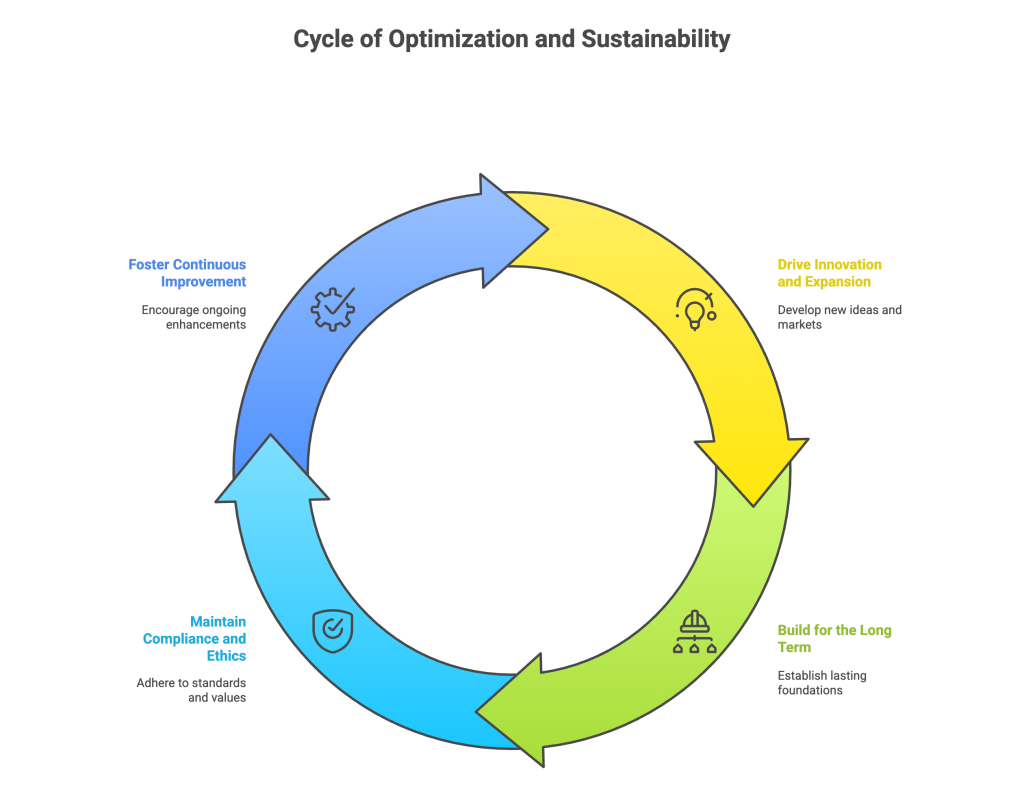
Continuous Improvement Culture
The most successful AI implementations never stop improving. Create a culture of continuous learning and optimization where feedback is welcomed and acted upon.
Regular performance reviews should examine both technical metrics and educational outcomes. Are learners achieving better results? Is content development more efficient? Are staff members more satisfied with their work?
Don’t be afraid to make significant changes based on what you learn. AI technology evolves rapidly, and your implementation should evolve with it.
Innovation and Expansion
As you gain confidence and expertise, explore advanced AI applications. Consider predictive analytics that identify learners at risk of falling behind, virtual reality simulations enhanced by AI, or natural language processing that provides instant feedback on written assessments.
Stay connected with the broader AI and healthcare education community, but remember that innovation for its own sake rarely creates value. Focus on advances that solve real problems or create meaningful improvements for learners.
Building for the Long Term
Successful AI implementation requires sustainable practices and long-term thinking. Plan for ongoing technology updates, staff training, and policy revisions.
Develop relationships with AI vendors that go beyond simple procurement. Look for partners who understand healthcare education and can provide ongoing innovation and support. Create succession plans for key AI expertise within your organization.
Staying Compliant and Ethical
As AI technology evolves, so do regulatory requirements and ethical considerations. Stay informed about changes in healthcare education standards, data privacy regulations, and AI governance requirements.
Regular audits of your AI systems and practices help ensure ongoing compliance and identify areas for improvement. Maintain relationships with legal and compliance experts who understand both healthcare education and AI technology.
Measuring Success: Key Performance Indicators That Matter
Learning Outcomes
The ultimate test of your AI implementation is whether it improves learning outcomes for healthcare professionals. Track knowledge retention, skill acquisition, and real-world application of learned concepts. Monitor engagement metrics like completion rates, time spent learning, and voluntary participation in additional activities.
Operational Efficiency
Measure the operational benefits of AI implementation: reduced content development time, improved personalization, better resource utilization, and cost savings. But don’t sacrifice quality for efficiency. Track metrics like content development hours per learning hour, cost per learner, and time from content request to delivery.
Quality and Compliance
Monitor content accuracy, bias metrics, and compliance with regulatory requirements. Regular quality audits help ensure that AI enhancement doesn’t compromise educational integrity. Track learner feedback about content quality and relevance.
Your Roadmap to AI Success
A few years ago, I was skeptical about AI in healthcare education. Today, I can’t imagine managing continuing education programs without it. But success didn’t come from the technology itself—it came from approaching implementation strategically, learning from mistakes, and staying focused on educational outcomes.
Here are the principles that separate successful implementations from expensive failures:
- Start with strategy, not technology. Understand your problems before you look for AI solutions. The most sophisticated AI tool is useless if it doesn’t address real needs or integrate with your existing processes.
- Invest in people, not just technology. Your staff’s ability to effectively use AI tools will determine your success more than the capabilities of the tools themselves. Provide comprehensive training, ongoing support, and opportunities for experimentation and learning.
- Maintain human oversight. AI is powerful, but it’s not infallible. Maintain robust quality assurance processes and human review for all AI-generated content. As the Alliance presentation experts emphasized, transparency and human oversight are essential for responsible AI use.
- Think long-term. AI implementation isn’t a project—it’s an ongoing commitment to innovation and improvement. Plan for evolution, scalability, and sustainability from the beginning.
- Stay ethical and compliant. Healthcare education carries unique responsibilities for accuracy, bias prevention, and regulatory compliance. Don’t let efficiency pursuits compromise these essential standards.
- Measure what matters. Focus on outcomes that align with your educational mission—improved learning results, better learner experiences, and enhanced operational effectiveness.
- You’re not just implementing technology—you’re transforming how healthcare professionals learn and grow throughout their careers. The decisions you make today about AI integration will impact patient care for years to come.
- The journey may seem daunting, but organizations around the world are successfully harnessing AI to create more effective, efficient, and engaging continuing education programs. With careful planning, thoughtful implementation, and commitment to continuous improvement, your organization can join them in revolutionizing healthcare education.
The future of healthcare continuing education is being written now. Make sure your organization helps write that story instead of just reading it. Don’t forget to download our comprehensive roadmap for implementing artificial intelligence in healthcare continuing education programs.
You can also check out this article from the Alliance Almanac discussing AI in CME for further insight into this topic.