
Professional Development
Reconciling Professional Identity Formation in Medical Education
Sportsman et alAcademic medicine : journal of the Association of American Medical Colleges
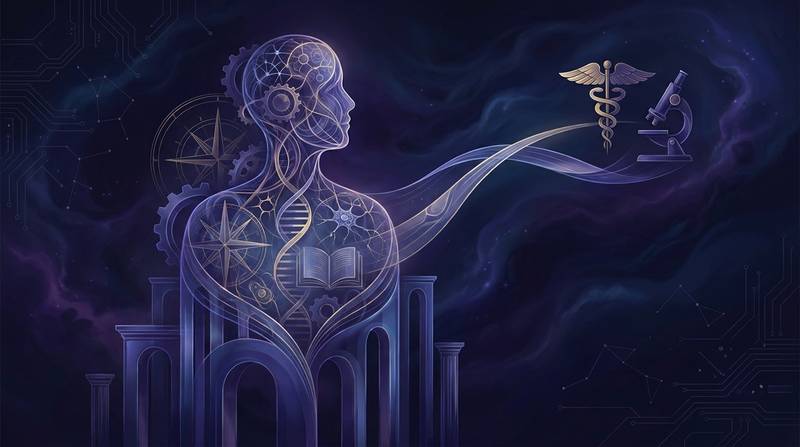
Professional identity formation (PIF) represents the ongoing, relational process in which medical trainees internalize the knowledge, skills, values, and behaviors essential to the medical profession. Despite growing interest in supporting PIF, implementing effective educational curricula has presented substantial challenges.
In this narrative review, the authors outline four critical tensions within medical training that impede PIF if left unaddressed: 1. Traditions of medicine: The persistence of historical standards regarding physician appearance, embodiment, and clinical practice in conflict with inclusive approaches. 2. Rules and expectations: The operationalization of professionalism into rigid, binary evaluation metrics rather than nurturing professional identity as an evolving developmental process. 3. Curriculum rigidity and assessment approaches: Fixed, time-based training models that disproportionately emphasize knowledge and clinical competence over individualized learning pathways and assessments evaluating communication, teamwork, and empathy. 4. Systems and practices of medicine: Implicit, structurally embedded demands for clinical efficiency that conflict with prioritizing medical education and high-quality patient care.
To address these barriers, the authors provide recommendations aimed at reconciling each tension, intending to foster learners' lifelong professional identity development and ultimately enhance patient care delivery.
Key Takeaways
- Four unaddressed institutional tensions hinder medical learners' professional identity formation: traditional historical norms versus inclusion, binary evaluation rules versus developmental growth, rigid curricula versus customized learning focusing on empathy and teamwork, and clinical efficiency pressures versus learning and care quality.
- The authors propose recommendations to reconcile these tensions across curricular and healthcare systems to support lifelong professional identity formation and improve patient care.
Read the original sourceAcademic medicine : journal of the Association of American Medical Colleges