

Unveiling the Secret Recipe: 9 Steps to Create a Knockout CME Program
Expert Perspectives · Madelyne Fabrizio, BA, CHCP · 2024-12-30
Do you need some pointers on how to develop a CME program that not only meets accreditation standards but also truly impacts healthcare professionals? Look no further! We’ll walk you through the entire process, from initial planning to continuous improvement. Whether you’re a seasoned CME coordinator or new to the field, these insights will help you craft a program that engages, educates, and inspires.
Step 1. Needs Assessment: The Foundation of Relevance
Every great CME program starts with understanding your audience. This crucial first step involves:
- Identifying knowledge gaps in your target audience through surveys, focus groups, or analysis of practice data
- Analyzing trends in healthcare and emerging areas of importance in various medical specialties
- Reviewing outcomes data from previous educational activities to identify recurring themes or unmet needs
It’s important to keep in mind that a well-executed needs assessment ensures your program addresses real-world challenges faced by healthcare professionals.
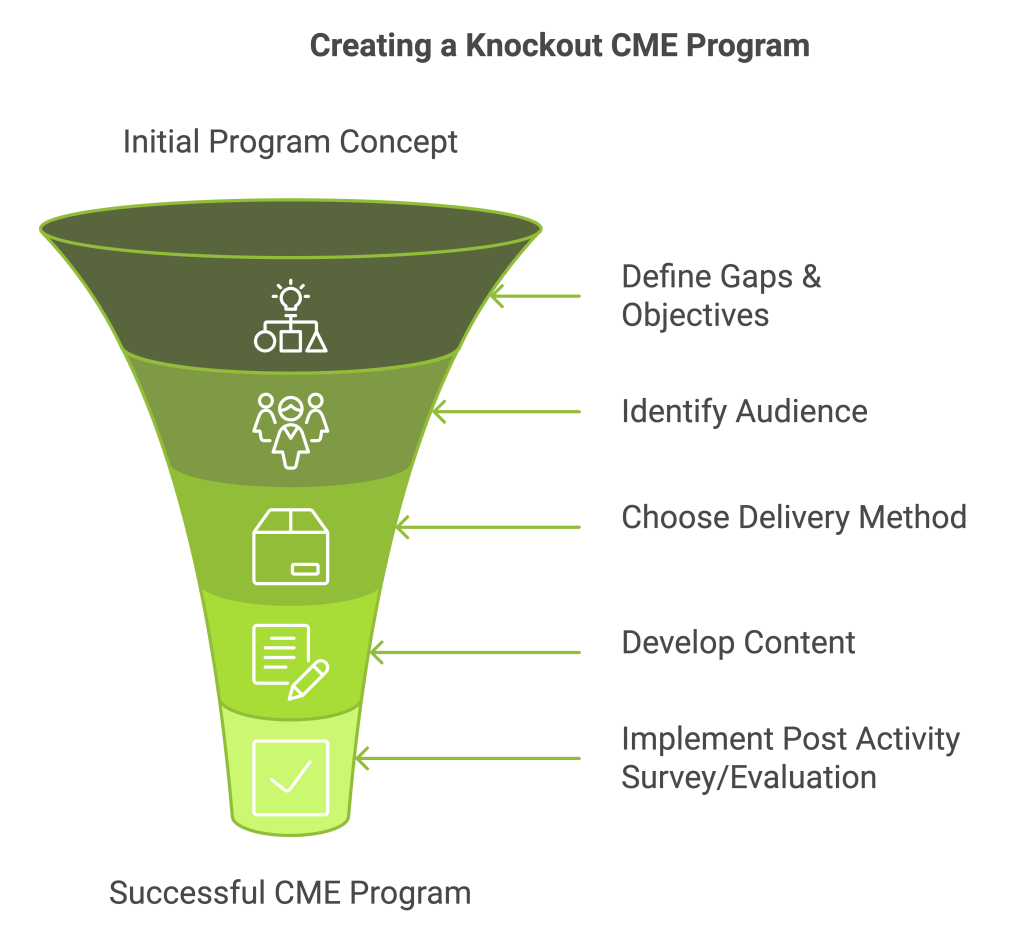
Step 2. Planning: Mapping Your Educational Journey
With a clear understanding of your audience’s needs, it’s time to chart the course of your CME program:
- Define clear, measurable learning objectives that align with identified knowledge gaps
- Choose an educational format that best suits your content and audience (e.g., live conferences, webinars, case-based learning)
- Select qualified faculty and presenters who are not only experts in their field but also engaging educators
- Develop a comprehensive content outline that covers all key areas identified in your needs assessment
Pro tip: Consider incorporating a mix of formats to cater to different learning styles and maximize engagement. Learning isn’t a one-size-fits-all approach. If you need more help deciding which format is best, visit the ACCME’s post regarding this topic here.
Step 3. Accreditation: Ensuring Quality and Recognition
Accreditation is what sets CME apart from other forms of education. Accreditation enhances the quality, credibility, and impact of your CME program, benefiting both your organization and the healthcare professionals who participate. To achieve it:
- Research and apply to an accredited CME provider that aligns with your program’s goals
- Familiarize yourself with the accrediting body’s standards (ACCME, ANCC, ACPE, etc.)
- Ensure your program design and content comply with all relevant accreditation requirements
- Prepare detailed documentation of your planning process, relevant financial relationships management, and expected outcomes
If you’re in need of an accredited provider, reach out to i3 Health to see how we can assist you with your educational programs!
4. Content Development: Crafting Impactful Learning Materials
This is where your program truly comes to life:
- Create educational materials that are engaging, evidence-based, and aligned with your learning objectives
- Incorporate the latest research and best practices in your field
- Ensure your content has been thoroughly vetted by utilizing a content validation review process, which will confirm there are no biases and content is scientifically rigorous
- Consider developing supplementary materials like infographics, case studies, Clinical Decision Aids, or interactive elements to enhance learning
5. Implementation: Bringing Your Vision to Life
The big day has arrived! Here’s how to ensure smooth sailing:
- Deliver your educational activity with confidence by preparing ahead of time with technology tests, speaker rehearsals/trainings, and answering any questions before the content goes live
- Engage participants through interactive methods like Q&A sessions, polls, gamification, or small group discussions
- Be prepared to address technical issues or unexpected challenges that may arise
- Create an atmosphere that encourages open dialogue and knowledge sharing among participants
Step 6. Evaluation: Measuring Success and Impact of the CME Program
Your program doesn’t end when the last slide is presented. Evaluation is key:
- Assess participant satisfaction through surveys or evaluations
- Measure learning outcomes through pre- and post-tests or other assessment methods
- Evaluate long-term impact by following up with participants to gauge changes in practice
- Use both quantitative and qualitative data to get a comprehensive picture of your program’s effectiveness
Step 7. Credit Awarding: Recognizing Participation and Achievement
Make sure your participants get the recognition they deserve:
- Issue CME certificates to eligible participants in a timely manner (certificates must have the correct accreditation language on each certificate type)
- Ensure your credit awarding process complies with accreditation standards (e.g. the ACPE no longer recommends issuing certificates to learners)
- Provide clear instructions for participants on how to claim and document their credits
Step 8. Reporting and Documentation: Dotting the I’s and Crossing the T’s
Proper documentation is crucial for maintaining accreditation and improving future programs:
- Maintain detailed records of attendance, credits awarded, and program materials
- Submit required reports to your accrediting body within specified timelines
- Organize your documentation in a way that facilitates easy retrieval for audits or future reference
Step 9. Continuous Improvement: Always Striving for Excellence
The best CME programs are those that evolve and improve over time:
- Analyze feedback and outcomes data to identify strengths and areas for improvement
- Stay updated on changes in accreditation requirements and best practices in CME
- Use insights gained to refine future programs and address emerging educational needs
Conclusion: Your Recipe for CME Success
Creating a successful CME program is both an art and a science. By following these 9 steps, you’ll be well on your way to developing educational experiences that not only meet accreditation standards but also drive meaningful improvements in healthcare practice. Remember, the key to a truly impactful CME program lies in understanding your audience, delivering high-quality content, and continuously refining your approach based on feedback and outcomes. With dedication and attention to detail, you can create CME programs that healthcare professionals will find valuable, engaging, and transformative. So, are you ready to take your CME program to the next level? Start with a thorough needs assessment and contact i3 Health Joint Providership Services to see how we can assist!